

newsletter: august 2026
meet this month's guest editor, Olivia Foster-Gimbel!

hi, it’s jordan!
🌻🍉☀️ though august is upon us, summer is still here!🌻🍉☀️
i’m delighted to introduce this month’s guest editor, Olivia Foster-Gimbel!
olivia foster-gimbel (she/her) 🌈🧜✨🐶💃

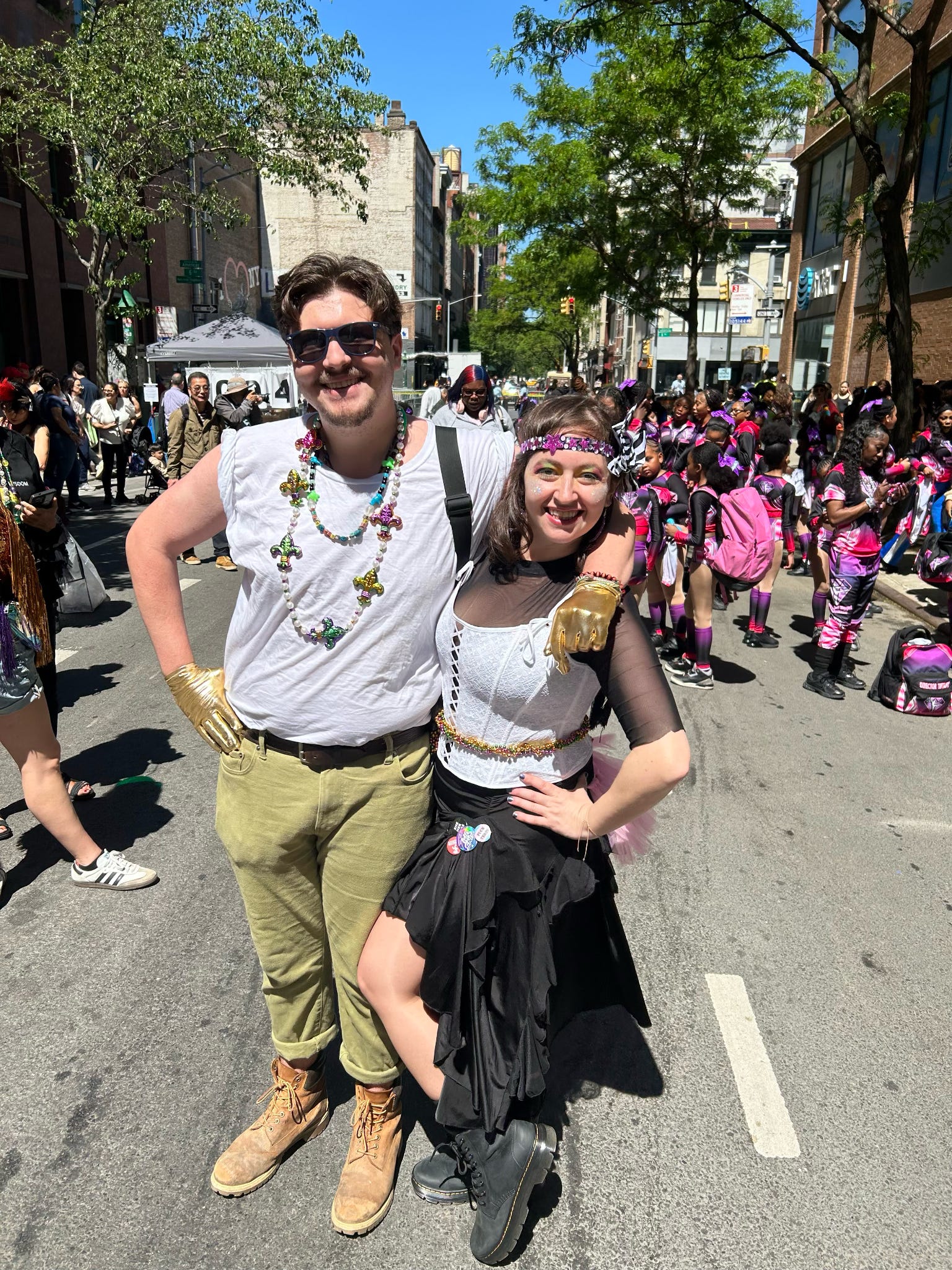
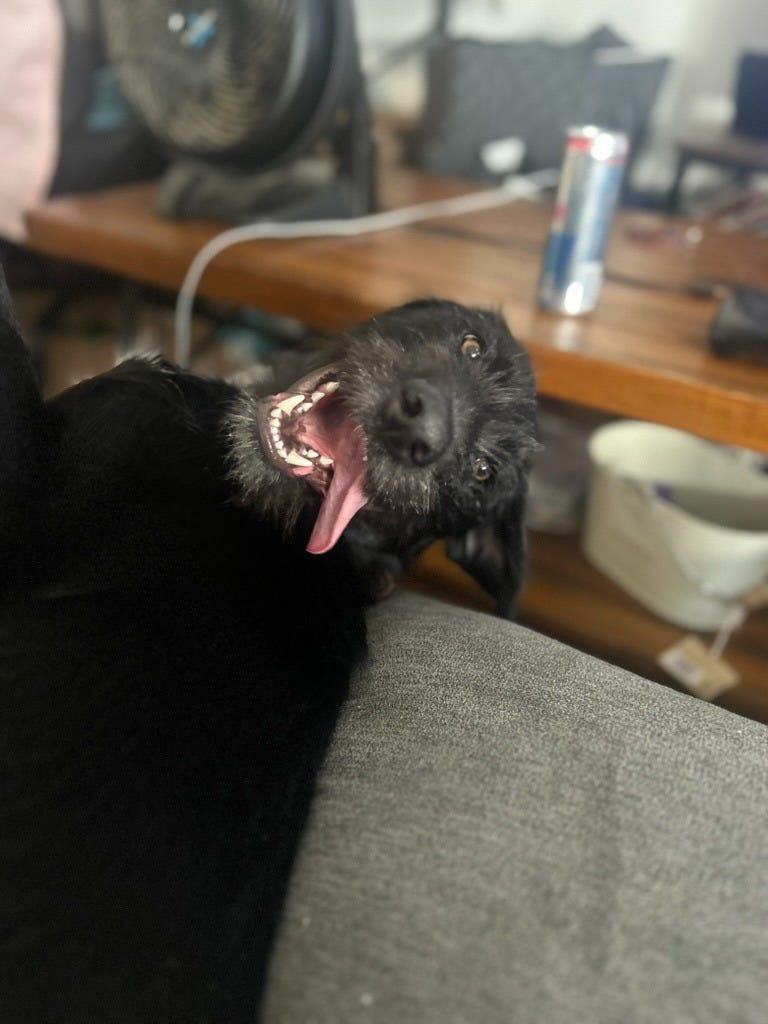
about me hi! i am a professor at rutgers business school (which is different from rutgers school of business lol) in the management and global business department. i teach and work out of newark so i’m still close to nyc, where i did my phd (nyu stern). i’m originally from the chicago suburbs, which means i say midwestern things like “pop” and “yeah no for sure.” i study social inequality in workplaces, with a particular focus on privilege and allyship. i’m particularly interested in backlash to social equity efforts and how people stay committed to social justice in the face of challenges, so i have plenty of real-world inspiration these days. i run a small lab of students studying amazing things like perceived dei risk, makeup as an assimilation strategy, and transgender inclusion in gender advocacy. something fun about me is that i am part of two dance teams! we perform in the coney island mermaid parade, the pride parade, the nyc dance parade, among others. it is amazing to have a space outside of academia for dance and creative expression (i made my outfit above out of sponges and reusable shopping bags!). at the end of the day, my favorite thing is snuggling up with my partner, puppy, and re-runs of parks and rec. which brings me to….
📺 watching 👀
amazing digital circus (netflix). head’s up, it’s weird. a group of people (i guess?) wind up in a virtual world with no idea how they got there or what they are doing. all of the characters are different animated forms: one is squiggles wearing a mask, another is quite literally just a chess piece, and the host of the circus is a giant pair of teeth in a suit (i told you it was weird!). they go on random adventures while trying to figure out where they are and how they can get back to reality. i loved how meta the show was and how it’s able to subvert so many tropes in ways that are novel and hilarious. i didn’t think a show could make me laugh with a joke about “assuming” but you know what they say about assu….
📚 reading 🤓
the storygraph: there was no way i was going to be able to choose just one book for this newsletter, so instead i’m going to plug my book tracking app. i am obsessed with an app called thestorygraph as an alternative to goodreads (which is owned by amazon). it gives you amazing data of the books you read, challenges to push you to read outside your comfort zone, and social features to connect with friends over books. follow me; i’d love to see what you’re reading! some of my recent favorites have been yerba buena by nina lacour, sky daddy by kate folk, and greta and valdin by rebecca k. reilly. also if you haven’t read project hail mary yet…what are you waiting for??
👂listening 🎧
originals and samples: so doechii’s song “anxiety” is obviously a sample of gotye’s popular “somebody that i used to know,” but did you know that song is a sample of a song called seville by luis bonfa? i recently made a playlist of original-sample trains and it’s so fun to listen to everything in order and see how artists incorporate other artists’ songs. i didn’t know biz markie’s “just a friend” sampled a song called “(you) got what i need” by freddie scott, or that the original song is so romantic 😆
playlist here (heads up, i stopped using spotify when they were running ice recruitment ads, so you may not be able to play the songs but you can see what i’ve compiled): https://open.qobuz.com/playlist/58644614
🧠 thinking 🤯
polyamory: my former advisor/current collaborator and i were talking about “dual earner couples,” how that necessarily implies two people, and what that term means for people who have multiple partners. i haven’t been able to let it go since then. polyamory and other forms of consensual nonmonogamy are wayyyyyyy more common than we talk about, which means people are probably dealing with issues in workplaces that are not equipped for their relationship structure. i’ve been interviewing people in long-term nonmonogamous or polyamorous relationships to see how they navigate work-life disclosure and access to organizational benefits. i love that being a professor on summer break means i have the ability to pursue different lines of thought like this! if you know anyone who is eligible for an academic interview, please pass along this info: https://calendly.com/oliviafostergimbel/cnm-interviews?month=2026-07
🖊️ work i’d like to share 📃
Why Do We Talk About Race? Examining Goals in Discussions About Race in Interracial Friendships
Ashley L. Berkebile-Weinberg & Jennifer Steele
Personality and Social Psychology Bulletin (accepted; be on the look-out for it soon!)
a mile in her heels: do men and women agree on how often women are sexually objectified?
olivia a. foster-gimbel and renee engeln. sex roles (just got accepted a week ago!)
despite extensive research on women’s experiences of sexual objectification, no research has examined whether women and men are aligned in their estimates of how often women have these experiences. across three studies (one preregistered), we examined discrepancies between how often women reported experiencing sexual objectification and how often men believed women experienced this type of sexual objectification. participants estimated frequency using a verbally anchored response scale (“never” to “almost always”) and a numeric count (e.g., times per week). in studies 1 and 2, men’s estimates of how often women experience sexual objectification were significantly higher than women’s reports. in studies 2 and 3, women’s estimates for how often the “average young woman” experiences sexual objectification were significantly higher than men’s estimates for overt sexual objectification (e.g., catcalling), but significantly lower than men’s estimates for covert sexual objectification (e.g., leering). an analysis of participants’ explanations for this pattern revealed gendered differences in reasons for this discrepancy. this work points to a disconnect between how men and women perceive women’s experience of sexual objectification in their everyday lives.
olivia a. foster-gimbel and taylor phillips. pspb (2026)
psychological discomfort can motivate, demotivate, or even backfire upon efforts to encourage allyship. we consider the intensity of such discomfort to test curvilinear relationships between psychological discomfort and whites’ engagement in equity efforts. across four pre-registered studies (n = 4,563), we find support for our curvilinear model. first, we explore the relationship between collective discomfort and allyship intentions. while we find that collective discomfort is linearly associated with greater allyship, we find little evidence of diminishing returns. second, we find a curvilinear relationship between collective discomfort and defensive reactions: both low and high discomfort was associated with increasing defensive reactions to evidence of racial inequity (victimhood claiming, stigma reversal) than moderate discomfort. thus, we provide empirical support for the idea that dominant group members who experience high (vs. moderate) discomfort in the face of social inequality may be less likely to support equity. we offer insights on how to manage this issue
🗂️ papers i’d like to read this month 🗂️
confront in public, validate in private: effective male allyship responses to sexist remarks.
huang, h.-c. (brad), & evans, j. b.
journal of personality and social psychology (2026)
a (costly) penny for your thoughts? allies cause harm by seeking marginalized group members’ help when confronting prejudice.
osborne, m. r., anicich, e. m., & dupree, c. h.
journal of experimental social psychology (2026)
workplace allyship: an integrative review and agenda for future research.
funk, m., hartmann, s., & newman, a.
journal of organizational behavior (2026)
women lifting up women: the transformative potential of parallel-peer connections.
dibenigno, j.
administrative science quarterly (2026)
👓 OTHER THINGS THAT MIGHT INTEREST YOU 👓
Postdoc in the Meyer-Chabris lab: The Meyer-Chabris Lab in Geisinger’s Department of Bioethics and Decision Sciences is seeking an outstanding researcher for a position as a Postdoctoral Research Fellow; review ASAP; start date ASAP
Klarman Postdoc at Cornell: The Klarman Fellowships in the College of Arts & Sciences provide postdoctoral opportunities to early-career scholars of outstanding talent, initiative and promise; deadline 10/15
Postdoctoral Associate in Meta-Research at Carnegie Mellon; deadline 08/15
Assistant Prof at McGill in Social Psych: Department of Psychology of McGill University invites applicants for a tenure-track appointment in SOCIAL PSYCHOLOGY; deadline 08/20
Assistant Prof at Michigan in Social Psych: University of Michigan- TT Assistant Professor- Social Psychology; review 09/15
Assistant Prof at Haas Berkeley: The Haas School of Business at the University of California, Berkeley invites applications for a tenure-track faculty position in Behavioral Marketing with an expected start date of July 1, 2027; review deadline 09/08
Assistant Prof at Emory Goizueta Business School: Goizueta Business School at Emory University in Atlanta, GA, invites applications for a faculty position in our Organization & Management area beginning August 2027.; review deadline 10/01
Carleton College is seeking candidates for tenure track positions in Developmental Psychology and Biological Psychology, to start Fall 2027. Review starts Sept 1 for the Developmental Psychology search and Oct 1 for the Biological Psychology search. Please visit our department jobs website for more information and contact the department chair, Mija Van Der Wege (mvanderw@carleton.edu), with any questions.
This new paper by Ashokkumar and colleagues about whether LLMs can predict the results of social science experiments
….feel free to email us with questions, ideas, etc to add to this list!